


I just loved discovering this 1969 clip of singer and painist Nina Simone, singing her own adaption of a Bee Gees hit, ‘To love somebody.’ Nina sings from the heart and she has inspired another art-related fiction novel which I will release sometime this year.
Nina Simone, born Eunice Kathleen Waymon on February 21, 1933, in Tryon, North Carolina, was a legendary singer, songwriter, pianist, and civil rights activist whose music transcended genres and generations. Known for her powerful voice, remarkable piano skills, and socially conscious lyrics, Simone’s life was as complex and captivating as her art.
Simone was raised in a poor but musical family. Her mother, a Methodist minister, and her father, a handyman, recognized her prodigious talent early on. By age 3, Simone was playing the piano and later became the organist at her church. Her community raised funds for her to study classical piano under an Englishwoman named Muriel Mazzanovich, who introduced her to composers like Bach, Chopin, and Beethoven.
Simone dreamed of becoming the first Black classical concert pianist. After graduating as valedictorian from her high school, she attended the prestigious Juilliard School of Music in New York City. However, her aspirations to continue her studies at the Curtis Institute of Music in Philadelphia were thwarted when she was denied admission—a rejection she later believed was due to racial prejudice.
To support herself and her family, Simone began playing in bars in Atlantic City, where she adopted the stage name Nina Simone to hide her profession from her devout mother. “Nina” came from a nickname meaning “little one,” and “Simone” was inspired by the French actress Simone Signoret. During these performances, Simone began to develop her unique style, blending classical music with jazz, blues, folk, and gospel influences.
In 1958, Simone recorded her first album, Little Girl Blue, which included her hit rendition of “I Loves You, Porgy” from George Gershwin’s Porgy and Bess. The song became her only Top 20 hit in the United States and established her as a rising star. Her ability to infuse emotion and storytelling into her music captivated audiences.
Simone became deeply involved in the Civil Rights Movement during the 1960s. Her music took on a more political tone, addressing issues of racial injustice, inequality, and identity. Songs like “Mississippi Goddam” (a response to the murder of Medgar Evers and the bombing of a church in Birmingham, Alabama), “To Be Young, Gifted and Black,” and “Four Women” became anthems of the movement.
Simone’s activism extended beyond her music. She performed at civil rights rallies and worked with figures like Martin Luther King Jr., Malcolm X, and Lorraine Hansberry. However, her outspoken political views and confrontational approach made her a polarizing figure.
Simone’s life was marked by personal and professional struggles. She faced racism, financial difficulties, and an abusive marriage to her second husband and manager, Andrew Stroud. Diagnosed later in life with bipolar disorder, Simone’s mental health challenges often affected her relationships and career.
In the 1970s, disillusioned with the U.S., Simone left the country, living in various places, including Liberia, Switzerland, the Netherlands, and France. Despite these challenges, she continued to perform and record music.
Simone’s later years were quieter but no less impactful. She released her last album, A Single Woman, in 1993 and continued to perform until her health declined. She passed away on April 21, 2003, in Carry-le-Rouet, France, from breast cancer.
Nina Simone’s influence extends far beyond music. Known as the “High Priestess of Soul,” she inspired countless artists, including Aretha Franklin, Lauryn Hill, and Alicia Keys. Her work has been celebrated in films, documentaries (such as What Happened, Miss Simone?), and tributes.
In 2018, Nina Simone was inducted into the Rock and Roll Hall of Fame, cementing her place as one of the most important artists of the 20th century. Her music continues to resonate, reminding listeners of the power of art to challenge, inspire, and heal.
Nina Simone was a force of nature, a guiding light, and a reminder of what it means to create unapologetically. Her music is the kind that reaches into your soul and shakes it awake, daring you to feel, to act, to live more authentically.
What inspires me most about Nina is her fearlessness. She didn’t just play the piano or sing; she commanded it, owned it, and used it to tell the truth, no matter how uncomfortable that truth might be. As an artist, I find that courage electrifying. There are days when self-doubt creeps in, whispering that my work isn’t good enough or that I should play it safe. But then I think of Nina—how she stood up, time and again, against prejudice, rejection, and even her own personal struggles—and I find my own courage.
Her music, especially songs like “Feeling Good” and “Mississippi Goddam,” reminds me that art isn’t just about beauty; it’s about honesty. It’s about reflecting the world as it is while daring to imagine how it could be. When I create, whether it’s a painting, or a story, I strive to channel that same authenticity. I want my work to be a mirror and a beacon, just as Nina’s was.
Nina also inspires me to embrace all aspects of my identity—the light and the shadow, the joy and the pain. She lived with such raw intensity, turning her struggles into songs that still resonate with millions. That alchemy, that ability to transform pain into beauty, is something I aspire to in my art and in my life.
And finally, Nina’s voice—deep, rich, and unapologetically hers—reminds me to find and use my own. As an artist, it’s easy to feel pressure to conform, to dilute your message for the sake of acceptance. But Nina never did. She was defiant, unyielding, and true to herself. That’s a lesson I carry with me every day: to create not for approval, but from the heart.
Nina Simone once said, “An artist’s duty is to reflect the times in which we live.” Those words guide me as I navigate my own creative journey. Whether I’m writing about joy, painting abstract truths, or helping others unlock their potential, I hope to honor her legacy by staying true to my voice and my purpose.
Nina didn’t just inspire music; she inspired courage. And for that, I will always be grateful.
I think Nina would be proud of me showing up for joy during the pandemic when the powers that were spread fear and hate and tried to silence so many voices.
In this video, I share how I created an art gallery during Covid and created more joy for others
There’s a light, a certain kind of light, That’s never shone on me.
I want my whole life to be lived with you, lived with you.
There’s a way, everybody’s safe, To do each and every little thing, And it’s true. But what good does it bring If I ain’t got you, ain’t got you?
You don’t know What it’s like, baby, you don’t know what it’s like to love somebody, to love somebody, the way I love you
In my brain, see your face again. I know my frame of mind,
You ain’t got to be so blind. But I understand, ’cause I’m blind, So blind. But I’m a woman, can’t you see what I am?
I live and I breathe for You
what good does it do if I ain’t got you If I ain’t got you.
You don’t know, You don’t know what it’s like. You don’t know, You don’tknow what it’s like To love somebody, To love somebody, To love somebody The way I love you.
Gotta do the last verse again
Just for myself. Hey now
In my brain I see your face again
Cause I know my frame of mind
Nobody has to be so blind And so unfeeling But I understand I’m blind So blind.
Can’t you see what I am?
I live and I breathe for you.
What good does it do? I ain’t got you now.
you don’t know. You don’t know what it’s like. You don’t know what it’s like.
To love somebody. To love somebody. I ain’t finished. To love somebody. Oh, oh, oh. To love somebody. The way that I love you

★★★★★ “A stunning, lyrical tribute to one of music’s greatest icons. This novel masterfully intertwines Nina Simone’s struggle for freedom with a modern story of rediscovery. A must-read for fans of art, history, and powerful women.”
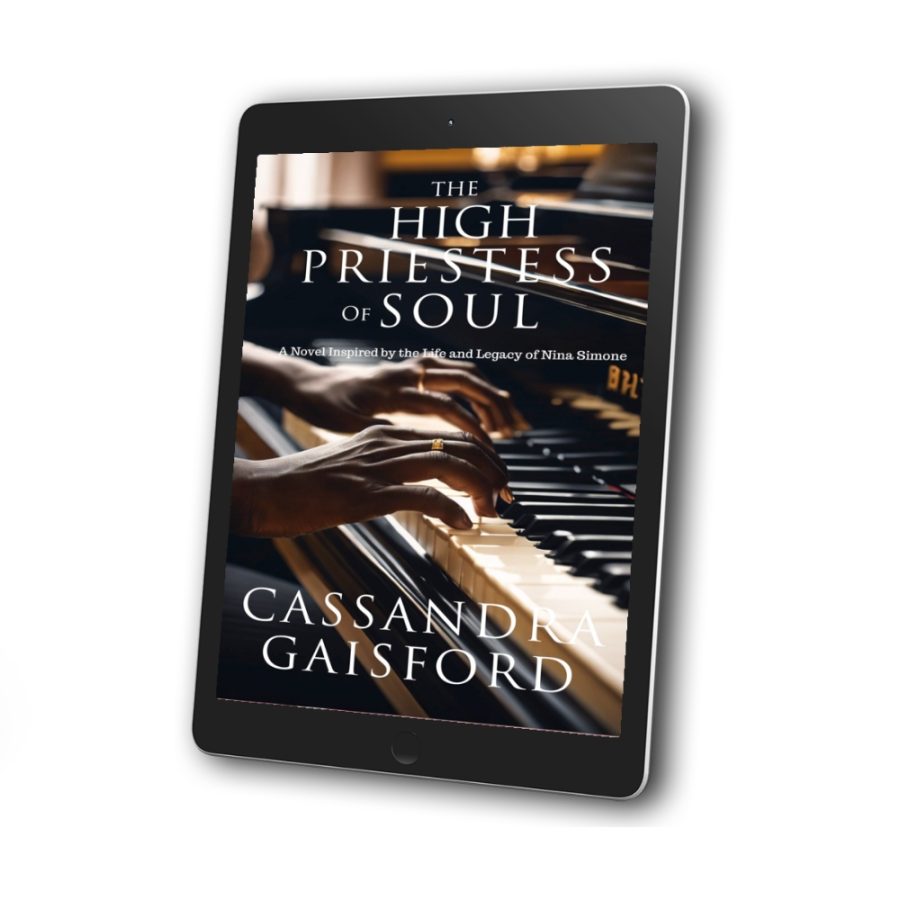
“The High Priestess of Soul” invites readers into the heart of an artist who dared to speak the truth, no matter the cost.
Experience the story of an artist, a warrior, and a legend who changed the world one note at a time, in this captivating work of art-related fiction.
Perfect for fans of historical novels, music biographies, and inspiring women’s stories. From the smoky nightclubs of Atlantic City to the grand stages of Carnegie Hall and the quiet solitude of exile, Nina Simone’s journey is an unforgettable tale of resilience, defiance, and the transformative power of music.
Through dual narratives—her rise to fame and the modern-day curator piecing together her legacy—this novel explores themes of identity, activism, and the cost of staying true to yourself.
AMAZON:
US: https://www.amazon.com/dp/B0DV88ZKHS
CA: https://www.amazon.ca/dp/B0DV88ZKHS
UK: https://www.amazon.co.uk/dp/B0DV88ZKHS
AU: https://www.amazon.com.au/dp/B0DV88ZKHS
iBOOKS, BARNES & NOBLE AND OTHER GREAT BOOKSTORES:
https://books2read.com/u/mdR5MR
Enjoy other novels by Cassandra here>>
How Helen Frankenthaler Inspires me
David Lynch: How He Inspired Me
Max Gimblett, Cassandra Gaisford and inspiration
‘I Transform Hate into Love’: – How Louise Bourgeois Inspires The Joyful Artist
9 Ways to Apply Paulo Coelho’s Philosophy to Enhance Your Creative Life
How Taylor Swift Inspires My Creative Journey: Heart, Feelings, and the Power of Storytelling
Posted in: Blog

ABOUT CASSANDRA
All my creations are infused with positive energy, love, and light. I believe in the power of beauty, joy, love, purpose, and creativity to transform your life.
RECENT BLOG POSTS
CONTACT
P: +64 (0) 21 873 833
E: hello@thejoyfulartist.co.nz
BE SOCIAL


© 2026 The Joyful Artist
Website by Webstudio