


There is something wonderfully poignant about finding Vincent van Gogh on a rainy Wednesday morning, reading about a painting that has become the subject of a battle over ownership and money, and discovering that what you really want to know is the man who stood beneath those magnificent flowering trees and painted them.
Because before this painting became an asset, an inheritance, a disputed possession or an object of extraordinary financial value, it was an encounter between a man and the living world.
And Vincent was nearing the end of his life. 66 days later, depressed and despairing he would take his life
Look at those extraordinary chestnut trees. The deep cobalt-blue sky, the exuberant green foliage, the little golden candles of blossom rising through the branches. The trees seem almost electrically alive.
What moves me particularly is the contrast between the tremendous energy of the trees and the small human figures beneath them. The people are going about their ordinary business. But Vincent has made the trees monumental. It is almost as though the trees, rather than the people, are the true inhabitants of the street.
And perhaps that tells us something about where Vincent found consolation.
Auvers-sur-Oise, France
Sotheby’s dates the painting to this precise day, just four days after Vincent arrived in the village and only 66 days before his death on 29 July 1890. Legendary: The
Vincent had just left the asylum at Saint-Rémy-de-Provence, where he had voluntarily sought treatment. He travelled north, briefly visited his beloved brother Theo and Theo’s family in Paris, and settled in Auvers-sur-Oise, a village with a thriving artistic history.
He was 37 years old.
His hopes were cautiously returning. He had come to Auvers to be near Dr Paul Gachet, who had an interest in art and experience treating artists.
Vincent rented a modest room at the Auberge Ravoux. He was surrounded by countryside, village houses, fields, gardens and trees.
And almost immediately, he began painting with extraordinary intensity.
The flowering chestnut trees were among the first subjects to capture his attention. Sotheby’s +1
There are several things I find fascinating.
The blossoms are not delicately painted. They are vigorous little strokes of yellow, cream, white and orange. They remind me of candles, flames and bursts of energy. Vincent wasn’t merely recording the appearance of the tree. He was giving the sensation of its vitality.
The sky is a remarkable blue. Rather than a conventional pale spring sky, Vincent surrounds the foliage with a deep, almost nocturnal blue. This creates a dramatic contrast, making the flowering canopy seem luminous.
The figures are mysterious. Three women stand beneath the trees, while a solitary man walks along the road. Sotheby’s suggests that the lone figure may even represent Vincent himself. That is an intriguing interpretation, although not an established identification. Sotheby’s
I love the possibility of Vincent placing himself in this world as a solitary observer, walking towards something beautiful.
The chestnut trees are enormous. They occupy most of the canvas, dwarfing the buildings and people. Their branches seem to merge into one immense flowering presence.
For an artist who had experienced such psychological suffering, there is something deeply moving about this expression of abundance.
It would be too simplistic to claim that Vincent was happy when he painted it. We cannot know his emotional state from the canvas alone.
But we can say that he was looking closely, working passionately and responding to the extraordinary beauty of spring.
On 25 May 1890, Vincent wrote to Theo and his wife Jo, thanking them for a letter and fifty francs.
He described seeing Dr Gachet, arranging to paint at his house and hoping they might become friends.
He also revealed something touching: Gachet was discouraged by his work as a country doctor, just as Vincent was sometimes discouraged by painting.
Yet Vincent was hopeful that this new relationship might help him manage his melancholy. webexhibits.org
I find this especially moving. While Vincent was creating a painting of astonishing beauty, he was still dependent on his brother’s financial support and seeking friendship, understanding and emotional stability.
There is another lovely detail. In Auvers, Vincent encountered something like a second spring. Having missed much of the blossom season in Provence because of his illness, he found chestnut trees still flowering in northern France. wga.hu +1
He had not missed the blossoms after all.
What a beautiful metaphor for renewal.
The painting is scheduled for auction in New York on 18 November 2026, with reports placing its expected value around US$180 million. The descendants of former Jewish owners have challenged its Nazi-era provenance, arguing that a 1936 sale occurred under persecution-related pressure. Sotheby’s disputes that interpretation. Fashion Times UK +1
The provenance questions deserve serious examination, particularly given the historical injustice involved.
But I understand why your heart goes first to Vincent.
There is something almost unbearable about the contrast between a man who needed fifty francs from his brother and the extraordinary fortunes now associated with his paintings.
And perhaps the greatest irony is that Vincent’s original gift was not the ownership of the trees, or even their monetary value. It was his ability to help us see them.
Venus finds me on a rainy Wednesday morning, contemplating Vincent van Gogh’s flowering chestnut trees.The world is arguing about who owns them and what they are worth. I find myself wondering instead about the man who stood before them on a spring day in May 1890, only four days after arriving in Auvers-sur-Oise.Vincent had come seeking healing, friendship and a new beginning. And there, waiting for him, were the chestnut trees in flower.He had missed the blossoms in Provence. But spring had found him again.I look at those magnificent trees, their golden blossoms rising like candles against a cobalt sky, and think of the extraordinary generosity of an artist who could transform an ordinary village street into something immortal.How much joy did he experience in making this painting? Did he know, even fleetingly, how beautiful it was?I hope he did.Today, I care less about the millions and more about the miracle of his seeing.Because the true treasure is not simply the painting.It is the vision of the man who made it.And perhaps wisdom is knowing that even when we believe we have missed our season, life may still have another spring waiting for us.

You might particularly enjoy Retracing the Final Days of Vincent van Gogh. It takes you back to Auvers-sur-Oise and the streets that inspired this very painting.
There is something wonderfully poignant about finding Vincent van Gogh on a rainy Wednesday morning, reading about a painting that has become the subject of a battle over ownership and money, and discovering that what you really want to know is the man who stood beneath those magnificent flowering trees and painted them.
Because before this painting became an asset, an inheritance, a disputed possession or an object of extraordinary financial value, it was an encounter between a man and the living world.
And Vincent was nearing the end of his life.
Look at those extraordinary chestnut trees. The deep cobalt-blue sky, the exuberant green foliage, the little golden candles of blossom rising through the branches. The trees seem almost electrically alive.
What moves me particularly is the contrast between the tremendous energy of the trees and the small human figures beneath them.
The people are going about their ordinary business. But Vincent has made the trees monumental.
It is almost as though the trees, rather than the people, are the true inhabitants of the street.
And perhaps that tells us something about where Vincent found consolation.
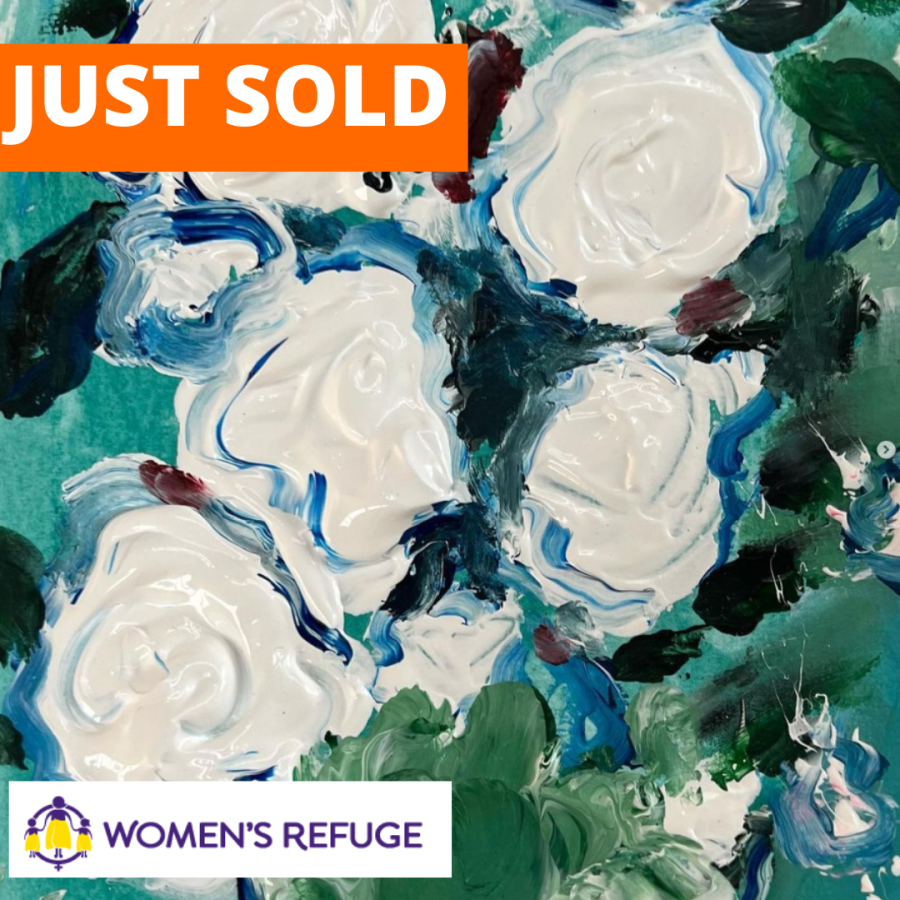
ROSES-ODE-TO-VINCENT-VAN-GOGH
24 May 1890
Auvers-sur-Oise, France
Sotheby’s dates the painting to this precise day, just four days after Vincent arrived in the village and only 66 days before his death on 29 July 1890. Legendary: The
Vincent had just left the asylum at Saint-Rémy-de-Provence, where he had voluntarily sought treatment. He travelled north, briefly visited his beloved brother Theo and Theo’s family in Paris, and settled in Auvers-sur-Oise, a village with a thriving artistic history.
He was 37 years old.
His hopes were cautiously returning. He had come to Auvers to be near Dr Paul Gachet, who had an interest in art and experience treating artists.
Vincent rented a modest room at the Auberge Ravoux. He was surrounded by countryside, village houses, fields, gardens and trees.
And almost immediately, he began painting with extraordinary intensity.
The flowering chestnut trees were among the first subjects to capture his attention. Sotheby’s +1
Look more closely at the painting
There are several things I find fascinating.
The blossoms are not delicately painted. They are vigorous little strokes of yellow, cream, white and orange. They remind me of candles, flames and bursts of energy. Vincent wasn’t merely recording the appearance of the tree. He was giving the sensation of its vitality.
The sky is a remarkable blue. Rather than a conventional pale spring sky, Vincent surrounds the foliage with a deep, almost nocturnal blue. This creates a dramatic contrast, making the flowering canopy seem luminous.
The figures are mysterious. Three women stand beneath the trees, while a solitary man walks along the road. Sotheby’s suggests that the lone figure may even represent Vincent himself. That is an intriguing interpretation, although not an established identification. Sotheby’s
I love the possibility of Vincent placing himself in this world as a solitary observer, walking towards something beautiful.
The chestnut trees are enormous. They occupy most of the canvas, dwarfing the buildings and people. Their branches seem to merge into one immense flowering presence.
For an artist who had experienced such psychological suffering, there is something deeply moving about this expression of abundance.
It would be too simplistic to claim that Vincent was happy when he painted it. We cannot know his emotional state from the canvas alone.
But we can say that he was looking closely, working passionately and responding to the extraordinary beauty of spring.

If-you-truly-love-nature-you-will-find-beauty-everywhere.-Vincent-Van-Gogh-How-Far-Will-I-go
On 25 May 1890, Vincent wrote to Theo and his wife Jo, thanking them for a letter and fifty francs.
He described seeing Dr Gachet, arranging to paint at his house and hoping they might become friends.
He also revealed something touching: Gachet was discouraged by his work as a country doctor, just as Vincent was sometimes discouraged by painting.
Yet Vincent was hopeful that this new relationship might help him manage his melancholy. webexhibits.org
I find this especially moving. While Vincent was creating a painting of astonishing beauty, he was still dependent on his brother’s financial support and seeking friendship, understanding and emotional stability.
There is another lovely detail. In Auvers, Vincent encountered something like a second spring. Having missed much of the blossom season in Provence because of his illness, he found chestnut trees still flowering in northern France.
He had not missed the blossoms after all.
What a beautiful metaphor for renewal.
And now, 136 years later…
The painting is scheduled for auction in New York on 18 November 2026, (today) with reports placing its expected value around US$180 million. The descendants of former Jewish owners have challenged its Nazi-era provenance, arguing that a 1936 sale occurred under persecution-related pressure. Sotheby’s disputes that interpretation.
The provenance questions deserve serious examination, particularly given the historical injustice involved.

Artist’s Talk: Joan Mitchell, Vincent van Gogh and Sunflowers IV
There is something almost unbearable about the contrast between a man who never sold a painting in his lifetime needed fifty francs from his brother and the extraordinary fortunes now associated with his paintings.
And perhaps the greatest irony is that Vincent’s original gift was not the ownership of the trees, or even their monetary value. It was his ability to help us see them.
Venus finds me on a rainy Wednesday morning, contemplating Vincent van Gogh’s flowering chestnut trees.The world is arguing about who owns them and what they are worth. I find myself wondering instead about the man who stood before them on a spring day in May 1890, only four days after arriving in Auvers-sur-Oise.
Vincent had come seeking healing, friendship and a new beginning.
And there, waiting for him, were the chestnut trees in flower. He had missed the blossoms in Provence. But spring had found him again. I look at those magnificent trees, their golden blossoms rising like candles against a cobalt sky, and think of the extraordinary generosity of an artist who could transform an ordinary village street into something immortal.
How much joy did he experience in making this painting? Did he know, even fleetingly, how beautiful it was?
I hope he did.
Today, I care less about the millions it may sell for and more about the miracle of his seeing. Because the true treasure is not simply the painting. It is the vision and the heart and soul and profound sensitivity of the man who made it.
And perhaps wisdom is knowing that even when we believe we have missed our season, life may still have another spring waiting for us.
Vincent van Gogh has been one of my greatest artistic inspirations for decades. His extraordinary use of colour, his love of flowers and nature, his emotional sensitivity and his determination to create beauty despite adversity have profoundly influenced my life and art.
My love affair with Vincent began when I encountered his magnificent painting Roses at the Metropolitan Museum of Art in New York. That experience rekindled my passion for painting and helped change the direction of my life.
If you love Vincent as much as I do, I invite you to explore some of my other reflections on his remarkable life, art and enduring legacy.
Can a Painting Change Your Life?
Discover how standing before Vincent’s Roses in New York became a life-changing encounter, inspiring my return to painting and deepening my belief in the healing power of beauty.
Ode to Vincent van Gogh: The Art of Success
An exploration of Vincent’s passion, perseverance and artistic legacy, including the extraordinary financial value his paintings achieved after his death. I also share how his courage inspired my own creative journey.
Why I Live Soberly & Vincent van Gogh Tried Too
Inspired by Vincent’s deeply personal letters, I reflect on sobriety, emotional wellbeing, creativity and the importance of protecting the mind and spirit.
How to Be More Resilient and Have Gaslight Repellant
How Vincent’s courage, his love of yellow and his extraordinary paintings have inspired me to find strength, healing and happiness through art.
2022 in Review — Fear Can Drive You
A personal reflection featuring paintings inspired by Vincent, the joy of creating art and the wonderful connections that develop between artists and collectors.
Artist’s Talk: Joan Mitchell, Vincent van Gogh and Sunflowers IV
Join me in my studio as I share the inspiration behind my painting Sunflowers IV, influenced by two artists I deeply admire: Vincent van Gogh and Joan Mitchell.
Inspired by Alexei Navalny’s life and legacy, I explore the sunflower as a symbol of hope, love, courage and renewal. I also share my creative process, from experimenting with complementary colours and expressive brushstrokes to discovering how painting can transform grief into beauty.
Like Vincent, I find extraordinary meaning in flowers, even as they begin to fade. Their beauty reminds me of life’s cycles and the enduring power of the human spirit.
Art is more than something we create. It is a way of keeping hope alive.
Vincent reminds me that the value of art cannot be measured in money alone.
A painting can change a life. A flower can offer hope. A single brushstroke can communicate something that words cannot express.
And sometimes, even when we believe we have missed our season, life has another spring waiting for us.
With love, light and joyful creativity,
Cassandra Gaisford
The Joyful Artist
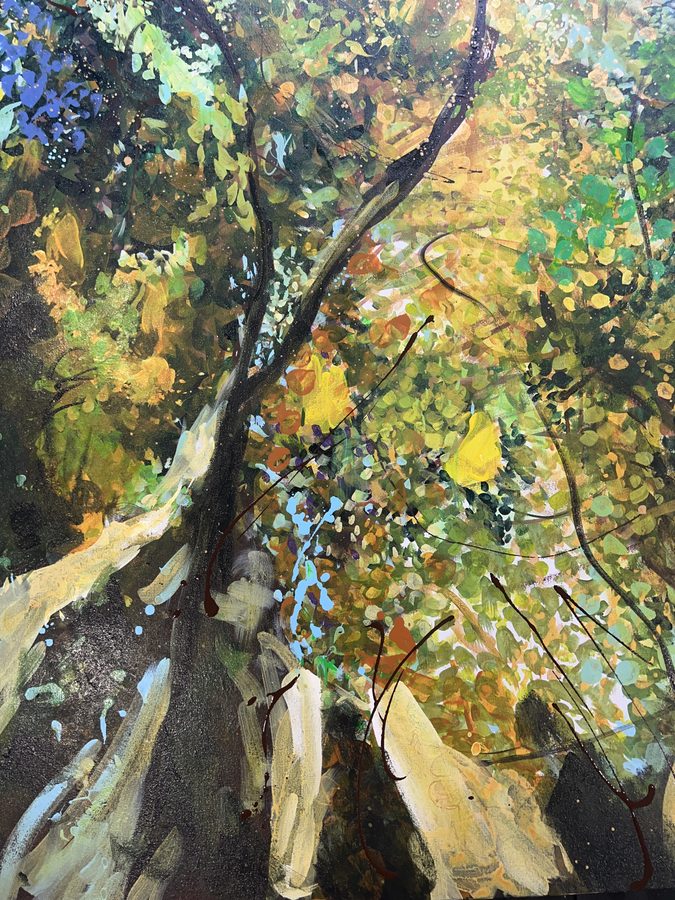
In 2026, my creative journey took me to an extraordinary place: a chapel studio in Clayton, Panama.
There, surrounded by the sacred atmosphere of the chapel, I created eight monumental abstract paintings. I called the series Cathedral of Light.
Working with luminous layers, I sought to capture something beyond the visible world: the experience of light as hope, colour as healing, and beauty as a spiritual presence.
The paintings emerged through an intensely personal creative process involving meditation, music, Reiki, sound healing and the layering of colour. Even rainwater became part of my artistic rituals.
I wasn’t trying to paint what light looked like.
I wanted to paint what light felt like.
And now, looking at Vincent’s flowering chestnut trees, I recognise a shared artistic impulse across more than a century. His trees reach towards the heavens, their blossoms blazing against the deep blue sky. My paintings reach towards something similarly intangible: the joy, mystery and transformative power of light.
Of course, our paintings are very different. Vincent’s are rooted in the observed world, while mine move towards abstraction. Yet both speak to my belief that art can make the invisible visible.
My vision for the series grew into something larger: The Legacy of Joy — The Cassandra Gaisford Permanent Collection, conceived as a lasting home for the paintings at the Episcopal Conference Centre in Panama.
The proposed collection was dedicated to the memory of Christine Hornstein, whose life of spiritual service and compassionate care seemed beautifully aligned with the healing intentions behind the work.
The journey towards establishing that collection has had its challenges, reminding me that the creation of art and the question of who cares for it are two very different things. And perhaps that is why Vincent’s Châtaigniers en fleurs speaks to me so deeply today.
More than a century after his death, people are still arguing over the ownership and monetary value of his paintings. Yet the thing that moves me most is the gift he left us: the ability to experience the world through his eyes.
When I created Cathedral of Light, my deepest desire was not simply to make paintings that would endure. It was to create something that might bring joy, beauty, hope and spiritual nourishment to people I would never meet.
For me, that is the true legacy of art. Not merely what we own, but what we illuminate in the lives of others.

Image Credit & Copyright Disclaimer
Vincent van Gogh, Châtaigniers en fleurs (Flowering Chestnut Trees), 1890. Photograph: Sotheby’s.
Image reproduced for educational purposes, artistic appreciation and historical commentary. The original artwork is in the public domain. Photographic reproduction credited to Sotheby’s. No ownership of the image is claimed, and no affiliation with or endorsement by Sotheby’s is implied. All applicable photographic rights remain with their respective rights holders.
Love art, beauty and living a more inspired life?
Join me at The Joyful Artist for heartfelt stories from my studio, behind-the-scenes glimpses of new paintings, creative inspiration, and reflections on love, light and the extraordinary beauty of everyday life.
From Vincent van Gogh to my Cathedral of Light paintings, discover how art can awaken joy, inspire courage and transform the way we see the world.
Subscribe free and let’s create a more beautiful life together.
Beautiful inspiration, delivered occasionally. No clutter, no pressure. Unsubscribe anytime.
— Cassandra Gaisford
The Joyful Artist
Posted in: Blog

ABOUT CASSANDRA
All my creations are infused with positive energy, love, and light. I believe in the power of beauty, joy, love, purpose, and creativity to transform your life.
RECENT BLOG POSTS
CONTACT
P: +64 (0) 21 873 833
E: hello@thejoyfulartist.co.nz
BE SOCIAL


© 2026 The Joyful Artist
Website by Webstudio