


Growing up, I was often called “scatterbrained.” Teachers would shake their heads when I forgot homework, left my lunchbox behind, or stared out the window during class. “Have you been drinking Coco Cola,” they would caution when I became excited and overstimulated.
Friends teased me for jumping from one idea to the next in the middle of a conversation. “Oh, you’re just so scattered!” became part of how I saw myself. Scatterbrained: messy, forgetful, unreliable.
For years, I carried that label like a heavy weight. It wasn’t just a word—it was a judgment. It made me feel like I wasn’t enough, like there was something inherently wrong with me. Why couldn’t I stay focused like everyone else? Why did my mind seem to operate like a browser with 100 tabs open, each one demanding attention?
But over the last year, I’ve been reading more accounts of people ‘coming out’ with their ADHD diagnosis. As I write this post, for example, I read about New Zealand artist Annika Moa in the NZ Herald sharing her experience.
“Singer, songwriter and broadcaster Anika Moa describes her ADHD as ‘15,000 voices in my head, all day, every day’.
“I have so many ideas but I can’t execute them”, she says of her attention deficit hyperactivity disorder. “I make plans and change them all the time, I’m so impulsive and erratic.”
There is no normal, she shared. So why do so many people try (and fail) to fit in? What if, to achieve success, you had to ‘balance your strengths with your weaknesses.’ Or maybe, it’s not even about balancing at all, but leaning into more of what makes you beautiful—your gift to the world.

The headline “Anika Moa shares her experience of being diagnosed with ADHD as an adult – No Such Thing as Normal” caught my attention. I began wondering why modern times classifies certain minds as possessing a disorder (scroll to the bottom for my take on the pathologising of human experience.)
Annika’s description of how her mind worked hit so close to home, it felt like a lightbulb moment. I started reflecting on my own life and behaviors and thought: I would probably meet the criteria for ADHD too. The more I learned, the more I realized I wasn’t alone. Even Vincent van Gogh and Leonardo da Vinci are believed by many to have had ADHD based on their patterns of behavior and creative brilliance. That realization was empowering: If two of the greatest artists in history could thrive with hyperactive minds, so could I.
Though I haven’t sought an official diagnosis, reading about Annika’s experience made me look deeper into ADHD symptoms. The classic markers—difficulty focusing, forgetfulness, and bursts of energy or hyperfocus—seemed to describe me perfectly. I wasn’t scatterbrained; I was wired differently.
What struck me most was the idea that ADHD isn’t just a challenge—it’s a unique way of seeing the world. People like van Gogh and da Vinci, who were described as chaotic or unconventional in their time, transformed their “scattered” energy into masterpieces. Their creativity flourished because of their minds, not in spite of them.

Over time, I’ve learned to let go of the negative connotations tied to that word. Yes, my brain works differently. But it’s not a flaw—it’s a superpower. What others might see as “scatterbrained,” I now recognize as creativity. My ability to connect seemingly unrelated ideas isn’t a weakness—it’s why I can brainstorm innovative solutions and approach problems in ways others don’t.
For over four years I wrote a weekly career guidance column for The Dominion Post. People frequently marvelled, “How do you come up with so many ideas?” I didn’t know. I just had an infinite well of inspiration. Later it occured to me, that others didn’t. Where I found things easy, others struggled.
I share some of my newspaper columns and talk more about how to find your point of brilliance in my series of books, Midlife Career Rescue

Like Annika Moa’s journey and the stories of artists like van Gogh and da Vinci, I’ve learned to celebrate the strengths of my hyperactive mind:
Some people turn to medication like Ritalin (Methylphenidate), to help them through. You have to find what’s right for you. Because I don’t see my mind through the lens of a disorder, and I’m not keen on the side effects of medication, including: depression, drowsiness, dysphoria, exhaustion, headache, irritability, lethargy, nightmares, restlessness, and suicidal thoughts, I’ve developed strategies to help me balance strengths with weaknesses.
Life, and professional expertise and training in psychology and counselling has taught me that your greatest strength can be your greatest weakness and your greatest weakness, your greatest strength.
Even though I now embrace this way of thinking, I’ve had to develop strategies to manage the challenges that come with it:
Today, when someone calls me scatterbrained, I smile. It reminds me of the journey I’ve been on to embrace my unique perspective. If great minds like:
Can find success in their busy minds (some of these stars and others have spoken about their ADHD diagnosis; in others some people suspect ADHD) and if Vincent van Gogh and Leonardo da Vinci could create brilliance through their unconventional minds, then I can use my own “scatterbrain” to achieve amazing things too.
ADHD (Attention Deficit Hyperactivity Disorder) often presents challenges, but it also comes with unique strengths and advantages that many people with ADHD find empowering. Recognizing these benefits can help shift the narrative from focusing solely on struggles to embracing the positive aspects of an ADHD brain. Here are some potential benefits:
If you’ve ever been called scatterbrained—or if you’ve struggled with focus, organization, or feeling misunderstood—I want you to know you’re not alone. What others might see as a flaw could very well be your superpower. By understanding yourself and finding tools that work for you, you can turn challenges into strengths.
Labels like “scatterbrained” don’t have to define or limit you. They’re just a jumping-off point for discovering who you really are. Scatterbrained? Maybe. But also creative, resilient, and unapologetically me—The Joyful Artist.
– Vincent van Gogh
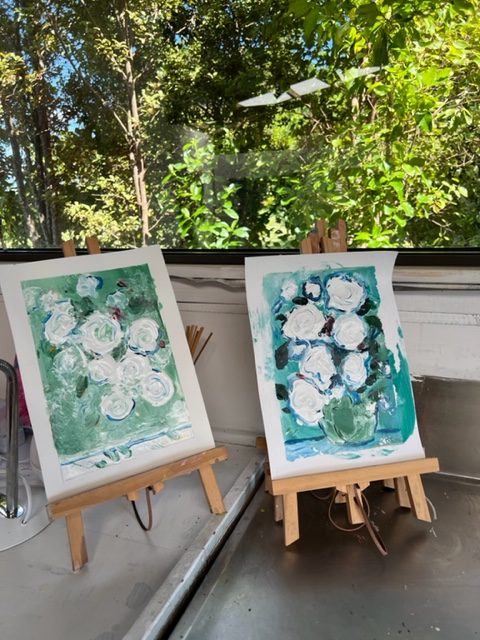
Ode To Vincent, Works on Paper, Cassandra Gaisford, 2023 SOLD
Who wants a world where everyone thinks the same? Not me! Life would be dreadfully dull without the quirky, colorful, and completely fabulous spark of neurodivergence. Whether it’s ADHD, autism, dyslexia, or another unique way of thinking, neurodivergent minds bring brilliance, creativity, and a delightful twist to everything they touch.
Gone are the days of looking at neurodivergence as a “problem” to fix. It’s time to flip the script, throw some confetti, and celebrate the magic that comes from thinking differently. Neurodivergence isn’t a bug—it’s the feature that makes life far more interesting!
Think of neurodivergence as having a brain that dances to its own beat. It’s a delightful mix of ways people process, feel, and experience the world. From ADHD’s whirlwind of ideas to autism’s laser focus, neurodivergence covers an incredible spectrum of ways to think and thrive. And let’s be honest: who doesn’t love a little variety?
Let’s be real—life’s best inventions, stories, and ideas often come from the quirkiest, most unexpected places. That’s the gift of neurodivergence! It shakes things up, brings fresh perspectives, and makes the world a far more interesting place to live.
So, here’s to the dreamers, the thinkers, the rebels, and the rule-breakers. Let’s celebrate neurodivergence for what it truly is: a glittering, joyful, unstoppable force that makes the world brighter, bolder, and so much better.

Ode to Vincent van Gogh: The Art of Success
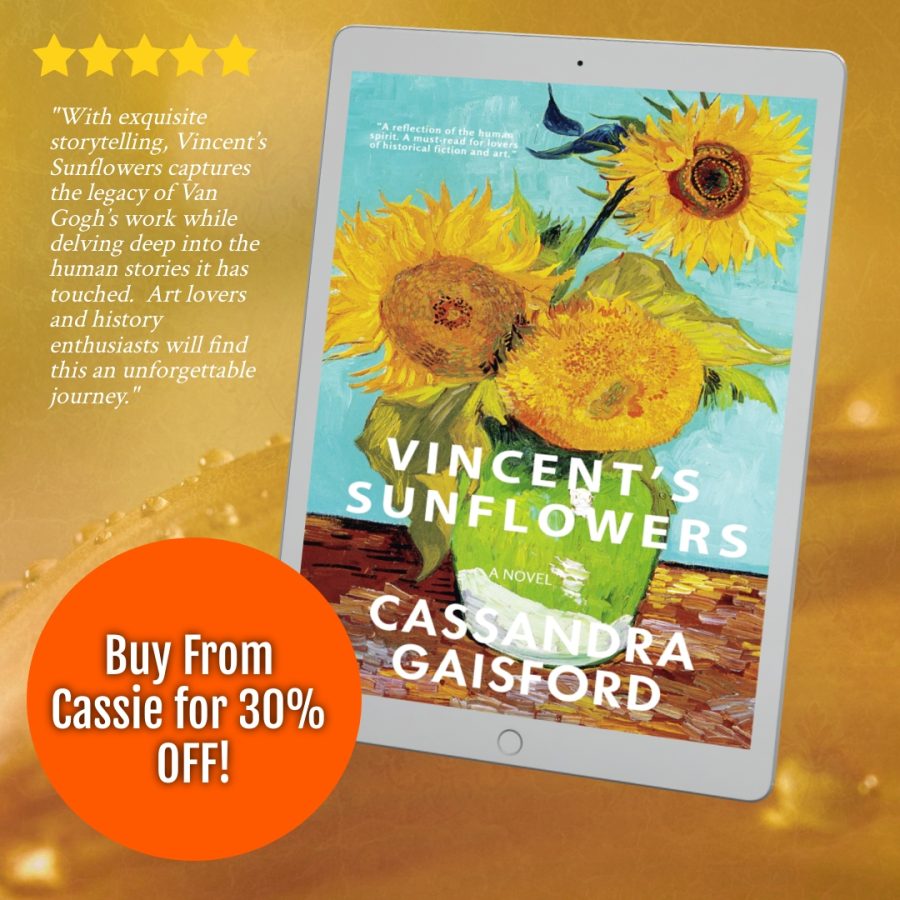
Vincent’s Sunflowers: A novel
Are you extremely sensitive, or is life unbearable?
Posted in: Blog
ABOUT CASSANDRA
All my creations are infused with positive energy, love, and light. I believe in the power of beauty, joy, love, purpose, and creativity to transform your life.
RECENT BLOG POSTS
CONTACT
P: +64 (0) 21 873 833
E: hello@thejoyfulartist.co.nz
BE SOCIAL


© 2026 The Joyful Artist
Website by Webstudio