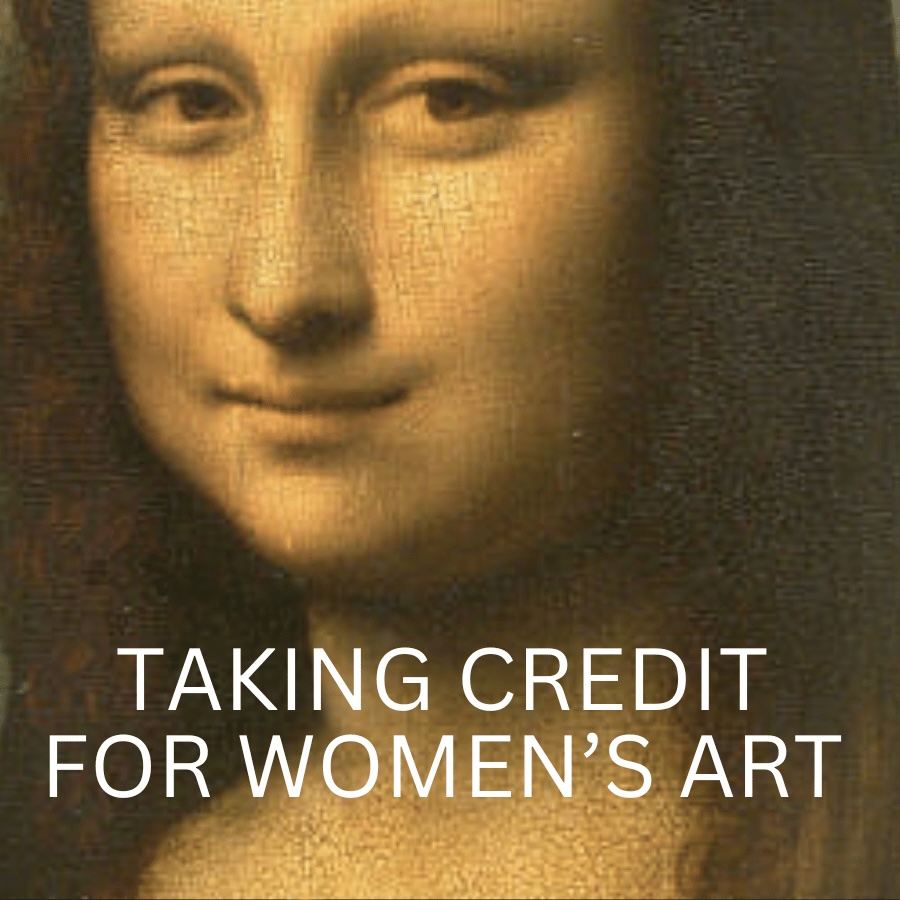
It was once widely believed that ‘Genuis is the province of the male.’ In some circles this still holds true. How interesting and intriguing that so many ‘genuises’ should take credit for women’s art! Given that historically history was written and published by men, it is understandable, yet frustrating, that so little had been written about talented female artists.
During my schooling in the 70s I was forbidden from learning how to paint. My parents consented to allow me to study art history and perhaps in part due to my annoyance, and perhaps because not one female artist was discussed in any lesson, nor any art history book I was given, my interested was less than enthusiastic. I failed my University Entrance Art History exam. Yet, here I am, a woman nearing 60 deeply absorbed in painting and loving learning and sharing the history of art—particularly of female artists.
Growing up the message I received was not to outshine others, to settle for less, and play small. Thanks to these pioneering
enduring symbols of female resilience, talent, and empowerment
There are numerous historical examples of men claiming or taking credit for art created by women. These instances reflect broader gender inequalities in art history, where women were often denied recognition for their work. Here are a few notable examples:
What Happened: Artemisia, one of the most famous female painters of the Baroque period, was overshadowed by her father, Orazio Gentileschi. For much of her early career, her works were attributed to him.
Why It Matters: Artemisia fought hard to establish her independent artistic identity. Today, her works, such as Judith Slaying Holofernes, are recognized for their power and emotional intensity.
What Happened: As a talented still-life painter in the Dutch Golden Age, Clara’s works were often attributed to male contemporaries like Osias Beert or other male painters.
Why It Matters: Her works are now celebrated for their detailed depictions of food and objects, and they provide insight into women’s roles in the art world of her time.
What Happened: Judith was a Dutch Golden Age painter. After her death, her works were attributed to her male contemporary Frans Hals for over two centuries.
Why It Matters: Leyster was one of the few women admitted to the Haarlem Guild of St. Luke, and her rediscovered works highlight the vibrancy and talent of female artists during her era.
What Happened: In the mid-20th century, Margaret’s husband, Walter Keane, claimed credit for her distinctive “big-eyed” paintings. Margaret was trapped in this deception until their divorce, when she famously proved her authorship in court by painting live.
Why It Matters: Margaret’s story is a modern example of exploitation and control in the art world. It was dramatized in the film Big Eyes (2014).
What Happened: Anguissola, a renowned Italian Renaissance painter, often faced the attribution of her works to male contemporaries such as Titian. Some of her portraits were even falsely claimed by male artists.
Why It Matters: As one of the first internationally recognized female artists, Anguissola helped pave the way for other women in the field.
What Happened: As a self-taught nun-artist in Florence, Nelli’s works were often hidden or attributed to male artists in her convent’s community.
Why It Matters: Recent restoration efforts have brought her paintings, such as The Last Supper, back into the spotlight, shedding light on the contributions of women in religious art.
What Happened: Claudel, a gifted sculptor, was overshadowed by her mentor and lover, Auguste Rodin. Many of her works were either dismissed or attributed to Rodin.
Why It Matters: Claudel’s story reveals the struggles of women in art who were confined to the roles of muse or assistant rather than being acknowledged as creators.
What Happened: Fontana was one of the first women to paint female nudes and large-scale altarpieces, but her male patrons and collaborators often took credit for her work.
Why It Matters: Fontana’s career challenges the stereotype that women artists of her time could only produce small, private works.
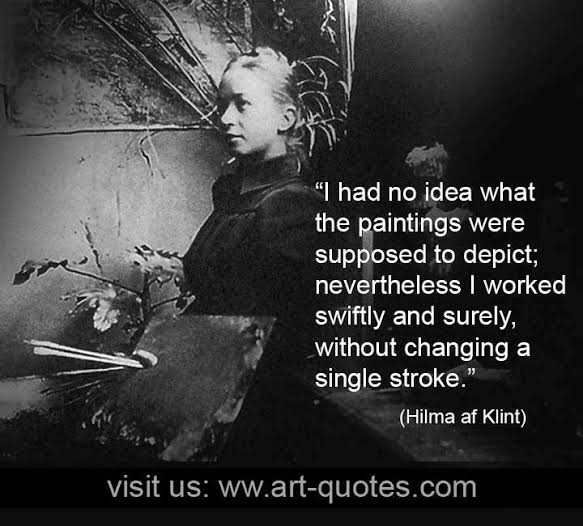
What Happened: A pioneer of abstract art, Hilma created her revolutionary paintings before Kandinsky, Mondrian, or Malevich, yet her work was largely ignored because it did not fit the male-dominated narrative of abstraction’s origins.
Why It Matters: Today, she is celebrated as a trailblazer, redefining our understanding of art history.
I was excited to see Hilma’s towering paintings in Wellington, New Zealand when I visited.
restoring their rightful place in history
These stories reveal the systemic marginalization of women in art and underscore the importance of uncovering and restoring their rightful place in history. Let’s take a deeper dive into historical wrongs which have now been corrected:
Lavinia Fontana (1552–1614): A Pioneer in Portraiture and Religious Painting
Lavinia Fontana was one of the most accomplished female painters of the Italian Renaissance. Born in Bologna to the painter Prospero Fontana, she became one of the first women to achieve financial independence through her art. Despite her success during her lifetime, her work was often overshadowed or attributed to her male contemporaries or collaborators. Here’s a detailed exploration of her career and the challenges she faced:
Early Life and Training
Lavinia was trained by her father, Prospero, who was a prominent painter in Bologna. As a result, many of her early works were assumed to be created by him, especially when they bore stylistic similarities to his.
Her father encouraged her artistic education, which was unusual for the time, as women were rarely trained professionally as painters.
Attribution Issues
Male Collaborators and Patrons: Lavinia often collaborated with other artists, particularly male artisans who specialized in areas like gilding or frame-making. This led to frequent misattributions of her contributions to these male counterparts.
Her Father’s Legacy: As a painter working in her father’s workshop, some of Lavinia’s early works were attributed to Prospero. Even after she gained recognition, some pieces created during this period remained linked to her father’s name.
Significant Works Often Misattributed
Portraits of Bolognese Nobility:
Lavinia was renowned for her detailed and lifelike portraits, particularly of noblewomen. However, several of these portraits were initially credited to male painters, such as Ludovico Carracci, due to the prevailing assumption that women could not achieve such technical skill.
Religious Altarpieces:
Lavinia painted numerous religious works, including The Assumption of the Virgin and The Madonna and Child with Saints. These large-scale works were groundbreaking for a female artist, as such commissions were typically reserved for men.
In many cases, the credit for these paintings was given to male assistants or collaborators who worked on ancillary aspects, like backgrounds or architectural details.
Artistic Style and Innovations
Lavinia’s portraits were characterized by a delicate rendering of textures and fabrics, intricate jewelry, and fine embroidery. These details set her apart from male contemporaries who often prioritized grandeur over intimate realism.
She was one of the first women to paint female nudes, breaking societal taboos. Her nude figures were often symbolic, as seen in Minerva Dressing, which depicted the goddess with a blend of realism and mythological grandeur.
Struggles with Gender Bias
Commission Challenges: Despite her talent, Lavinia had to fight for high-profile commissions. Patrons were often hesitant to trust a woman with large-scale religious works.
Male-Dominated Narrative: Art history during her time, and even long after, was written and shaped by men. Her achievements were frequently downplayed in favor of her male peers, such as the Carracci brothers, who worked in the same artistic circles in Bologna.
Recognition During Her Lifetime
Lavinia gained fame and wealth during her career, earning the patronage of the Roman Catholic Church, the Spanish royal court, and wealthy families in Bologna.
She became the official painter to Pope Gregory XIII, an exceptional achievement for a woman at the time.
Posthumous Misattributions
Many of her works remained uncredited or were attributed to male artists well into the 19th and 20th centuries. For example:
Portraits of noblewomen were sometimes attributed to lesser-known male Bolognese painters.
Religious commissions, like her Holy Family paintings, were misattributed to her male assistants or contemporaries.
Modern Recognition
Lavinia’s work has undergone a significant re-evaluation in recent decades. Art historians have worked to correctly attribute her pieces and highlight her role as a pioneer for female artists.
Major exhibitions, such as the 2019 retrospective at the Prado Museum in Madrid, have brought renewed attention to her legacy, solidifying her place in art history.
Legacy
Lavinia Fontana broke barriers for women in art, both in her technical achievements and her ability to secure major commissions. Her struggles with misattribution highlight the broader systemic challenges faced by women in the arts, underscoring the importance of continued research and advocacy for historically marginalized voices.
Artemisia Gentileschi (1593–1656): Fighting for Recognition in a Male-Dominated Art World
Artemisia Gentileschi, a Baroque painter celebrated for her dramatic and emotionally intense works, faced significant challenges in gaining recognition during her lifetime. Despite her immense talent, her art was often attributed to her father, Orazio Gentileschi, or dismissed due to her gender. Here’s a detailed exploration of Artemisia’s struggle for acknowledgment:
1. Early Misattributions to Orazio Gentileschi
Artemisia’s father, Orazio, was a successful painter in Rome and one of Caravaggio’s contemporaries. He trained Artemisia in his workshop, and her early works closely followed his style.
As a result, many of Artemisia’s paintings were attributed to Orazio, especially those created during her formative years, such as Susanna and the Elders (1610), which was long thought to be her father’s work.
Orazio’s influence and reputation overshadowed Artemisia’s, leading to the assumption that a woman could not have created works of such technical and emotional depth.
As I discuss below, Artemisia was sexually assaulted and her quest for justice had a profound impact on her work.
2. Susanna and the Elders (1610)
What Happened: Artemisia painted Susanna and the Elders at the age of 17, showcasing her exceptional talent for depicting human anatomy, emotion, and drama. The painting shows the biblical story of Susanna, a virtuous woman harassed by two lecherous elders.
Misattribution: For centuries, the painting was credited to Orazio Gentileschi. Critics argued that Artemisia, as a young woman, could not have created such a sophisticated work.
Modern Recognition: Scholars now attribute the painting to Artemisia, emphasizing its distinctively female perspective on Susanna’s plight, portraying her discomfort and vulnerability rather than idealized beauty.
3. Legal Battle and Its Impact on Attribution
In 1612, Artemisia became embroiled in a highly publicized rape trial against her tutor, Agostino Tassi. During the trial, her artistic talent was questioned, and her reputation was tarnished.
This scandal, combined with pervasive sexism, led to her exclusion from major artistic circles and further misattribution of her works. It became easier for patrons to credit male artists for her paintings rather than risk association with a woman whose character had been publicly scrutinized.
4. Judith Slaying Holofernes (1612–1613 and 1620–1621)
What Happened: Artemisia created two versions of Judith Slaying Holofernes, a brutal and emotionally charged depiction of the biblical heroine beheading the Assyrian general Holofernes.
Misattribution: For years, these paintings were attributed to her father or other male artists influenced by Caravaggio, such as Bartolomeo Manfredi or Valentin de Boulogne.
Why It Matters: The paintings are now recognized as quintessentially Artemisia, reflecting her unique ability to portray female strength and emotion, likely drawing on her personal experiences of trauma and resilience.
5. Mary Magdalene in Ecstasy and Other Works
Several paintings attributed to Orazio or other male Baroque artists are now believed to be Artemisia’s. For example:
Mary Magdalene in Ecstasy was attributed to Orazio or Simon Vouet for years before scholars identified it as Artemisia’s work, noting her distinctive use of light and her focus on the emotional interiority of female subjects.
Similarly, Cleopatra and Lucretia, which depict powerful women in moments of vulnerability, were long dismissed as works by male artists.
6. Career Challenges as a Female Artist
Institutional Barriers: Artemisia was denied access to professional guilds and commissions reserved for male artists, limiting her opportunities to sign her work or receive proper credit.
Male Assistants and Attributions: Artemisia often collaborated with male assistants or artists who provided backgrounds or secondary elements in her paintings. In many cases, the finished works were credited entirely to these collaborators.
Pressure from Patrons: Some patrons commissioned works from Artemisia but attributed them to male artists to enhance their prestige, perpetuating the cycle of misattribution.
7. Rediscovery and Modern Scholarship
Artemisia’s reputation was largely forgotten after her death, with many of her works absorbed into the oeuvre of male artists.
In the 20th century, feminist art historians, such as Linda Nochlin, began reevaluating Artemisia’s contributions. This led to the reattribution of many works, such as Judith Slaying Holofernes and Susanna and the Elders, and a deeper appreciation of her talent.
Recent exhibitions, including the 2020 National Gallery show in London, have solidified her status as one of the greatest Baroque painters.
The Legal Battle and Its Impact on Artemisia Gentileschi’s Attribution
The Context of the Trial
In 1612, Artemisia Gentileschi endured one of the most infamous rape trials of her time, a grueling event that deeply impacted her life and career. At 18 years old, Artemisia accused her tutor, Agostino Tassi, of raping her. Tassi was not only a painter but also a close associate of her father, Orazio Gentileschi, who brought the accusation forward on her behalf. This trial took place in a highly patriarchal society where women’s reputations and credibility were often questioned, particularly in matters of sexual violence.
The Stakes: The trial was not only a personal ordeal but also a professional risk for Artemisia. As a young, unmarried woman, her honor and future prospects were at stake, both socially and in the male-dominated art world.
Tassi’s Defense: Tassi, who had a history of criminal behavior, attempted to discredit Artemisia’s testimony by attacking her character. He claimed she was promiscuous and that their relationship had been consensual, an accusation that carried significant weight in the misogynistic legal culture of 17th-century Rome.
The Ordeal of the Trial
The trial lasted several months and included invasive and humiliating procedures aimed at verifying Artemisia’s claims:
Torture with Sibille: Artemisia was subjected to torture using “sibille,” metal rings tightened around her fingers, to test the truth of her statements. Despite the physical and emotional pain, she maintained her accusation, declaring, “It is true, it is true.”
Witness Testimonies: Tassi’s associates and others in the art world were called to testify, further dragging Artemisia’s reputation into the public spotlight.
The Verdict
Tassi was found guilty of raping Artemisia, but the punishment was lenient. He was briefly exiled from Rome, a sentence he largely ignored. Despite the legal victory, Artemisia bore the brunt of the scandal, as women in such cases often did, and her professional reputation was marred.
Impact on Artemisia’s Career
The trial’s fallout had profound implications for Artemisia’s career and the attribution of her work:
Questioning Her Credibility as an Artist
Many contemporaries dismissed Artemisia’s talent, attributing her artistic accomplishments to her father, Orazio, rather than recognizing her as an independent artist.
The trial fueled gossip, and Artemisia was often judged not by her work but by her personal life, with critics and patrons questioning her virtue and professionalism.
Professional Isolation
After the trial, Artemisia left Rome, likely in part to escape the stigma. She moved to Florence, where she attempted to rebuild her reputation. However, the controversy followed her, making it harder for her to secure commissions under her own name.
Misattribution to Orazio Gentileschi
Many of Artemisia’s early works were attributed to her father during her lifetime and long after her death. This included not only collaborative pieces but entirely original works that bore no stylistic resemblance to Orazio’s art.
Art historians speculate that this misattribution may have been intentional on the part of patrons, who preferred the prestige of commissioning a male artist over acknowledging Artemisia’s role.
Collaborative Works
Artemisia sometimes worked with her father or other male artists on larger commissions. In these cases, credit was almost always given to her male collaborators, even if Artemisia’s contributions were significant or dominant.
The Feminist Reclamation of Artemisia’s Work
The trial and its aftermath contributed to Artemisia’s marginalization in art history. For centuries, her story was largely forgotten, and many of her paintings were attributed to male artists. However, feminist art historians have played a key role in reclaiming her legacy:
Linda Nochlin’s Influence: The groundbreaking 1971 essay “Why Have There Been No Great Women Artists?” by art historian Linda Nochlin highlighted Artemisia as an example of systemic gender bias in the art world.
Modern Scholarship: Recent research has uncovered evidence of Artemisia’s authorship in works long attributed to Orazio or other Baroque painters. Paintings like Susanna and the Elders and Judith Slaying Holofernes are now celebrated as quintessential Artemisia works, reflecting her unique perspective and artistic mastery.
Why the Trial Matters Today
Artemisia’s trial is not just a historical footnote—it’s a lens through which we can understand the broader challenges faced by women in the arts:
It illustrates how personal and professional reputations were (and still are) intertwined for female artists.
It underscores the systemic barriers that denied women recognition and opportunities in male-dominated fields.
Artemisia’s perseverance in the face of such adversity makes her an enduring symbol of resilience and artistic brilliance.
Legacy
Artemisia Gentileschi’s story is a powerful reminder of the systemic barriers faced by women in art. Her works, once hidden behind the names of men, now stand as enduring symbols of female resilience, talent, and empowerment. By reclaiming her legacy, scholars have not only corrected historical inaccuracies but also provided a fuller, richer understanding of Baroque art.
Plautilla Nelli (1524–1588): The Forgotten Nun-Artist of the Renaissance
Plautilla Nelli was a self-taught artist and Dominican nun from Florence who painted during the Italian Renaissance. As the first-known female painter of Florence, she created numerous religious works, yet her contributions were often overlooked, misattributed, or hidden from public view due to her gender and her position in a convent. Here’s a detailed look at Plautilla Nelli’s career, her works, and the historical misattributions she endured:
1. Lack of Formal Training and Artistic Identity
Nelli lived and worked in the convent of Santa Caterina da Siena, where she taught herself to paint by copying works of Renaissance masters like Fra Bartolomeo and Andrea del Sarto.
Women at the time were not allowed to formally study art or anatomy, which meant Nelli had no access to live models. This limitation influenced her style and subjects, focusing exclusively on religious themes.
Despite her talent, as a woman and a nun, her artistic identity was often subsumed under the general work of the convent or overshadowed by male contemporaries.
2. The Last Supper (1570s)
What Happened: Plautilla Nelli created a monumental painting of The Last Supper, one of the largest by a woman artist of her time (nearly 23 feet wide). The work depicts Christ and his disciples in a deeply human and spiritual moment.
Misattribution: For centuries, this painting was ignored or misattributed, as it was assumed that such an ambitious piece could only have been created by a man. It was stored in poor conditions in a convent and remained hidden from public view.
Rediscovery: Art historians and restorers brought the painting back into the spotlight in the 21st century. The work was restored and displayed in 2019 at the Santa Maria Novella Museum in Florence, finally recognizing Nelli’s accomplishment.
3. Saint Catherine Receiving the Stigmata
What Happened: This work reflects Nelli’s devotional style and her deep connection to Dominican spirituality. The painting captures an intimate and emotional moment of divine grace.
Misattribution: Like many of her works, this painting was attributed to anonymous or male artists for centuries. It was housed in convents or church collections where attribution was rarely documented.
Significance: The painting is now recognized as a masterpiece of female devotional art, characterized by its vibrant colors and emotional depth.
4. Series of Lamentation Paintings
What Happened: Nelli painted several versions of Lamentation over the Dead Christ, depicting the Virgin Mary and other figures mourning Christ after his crucifixion.
Misattribution: These works were often credited to Fra Bartolomeo or other Dominican male painters because Nelli’s artistic lineage traced back to Bartolomeo’s style. Her ability to convey complex emotions was dismissed as beyond a woman’s skill.
Restoration Efforts: Art historians have reexamined these works, identifying stylistic elements unique to Nelli, such as her portrayal of female figures with deep emotion and subtle spirituality.
5. Hidden Works in Convents
What Happened: Nelli’s paintings were primarily created for her convent and other religious institutions. Many of these works remained hidden in cloisters, away from public view, and were rarely signed.
Misattribution: Over time, these paintings were often lumped into the generic category of “Florentine School” or credited to male artists who worked in a similar style.
Modern Recognition: Art historians are actively searching convent archives to identify more of Nelli’s work and attribute them correctly.
6. Barriers to Recognition
Convent Life: As a nun, Nelli had limited opportunities to promote her work or secure high-profile commissions. This isolation meant her work was largely confined to religious settings and overshadowed by male-dominated artistic circles.
Systemic Gender Bias: Renaissance art was steeped in a patriarchal system that rarely acknowledged women as professional artists. Works by women were often assumed to be collaborative efforts or entirely credited to male mentors.
7. Rediscovery in the 20th and 21st Centuries
Art Patronate of Advancing Women Artists Foundation (AWA): The Florence-based AWA Foundation has been instrumental in recovering and restoring Nelli’s works. Their efforts have included raising funds for the restoration of The Last Supper and conducting research into Nelli’s life.
Exhibitions: In 2017, Florence hosted its first-ever exhibition dedicated to Plautilla Nelli, titled Convent Art and Devotion in the Footsteps of Plautilla Nelli. The exhibition brought long-overdue attention to her contributions as a pioneer of female art in Renaissance Florence.
Why Nelli’s Legacy Matters
Plautilla Nelli’s story sheds light on the systemic erasure of women in art history. Despite her immense talent and her dedication to creating profound works of religious art, her contributions were hidden or dismissed for centuries.
Her rediscovery and the attribution of her works to her name challenge the long-standing narrative of male dominance in Renaissance art.
Nelli’s works provide a unique perspective, blending the devotional focus of religious art with a distinctly female gaze. Her portrayals of biblical stories often emphasized the emotional and spiritual struggles of her subjects in ways male artists rarely explored.
Enduring artist influences: Wild Hearts Can’t Be Broken
I’m profoundly grateful to these trailblazing women. Without their passion and tenacity female artists like myself may have still been banished to the shadows—forbidden to paint or to have a voice.
These pioneering artists have instilled in me the divinity of art and the power of creativity to touch people’s souls.
“Great works of art, music, and architecture that calibrate between 600 and 700 can transport us temporarily to higher levels of consciousness and are universally recognized as inspirational and timeless,” Dr. David Hawkins
ABOUT CASSANDRA
I am an artist, storyteller, intuitive guide, mentor and Reiki master. All my creations are infused with positive energy , inspiration, and light. I believe in magic and the power of beauty, joy, love, purpose, and creativity to transform your life. My greatest joy is helping your realize your dreams. That makes my soul sing!