


Hello my joys,
I often think of Eileen Gray. Her legacy as a furniture designer, architect, and boundary-breaker deeply inspires me—not just in how I approach my creative work, but in how I live my life.
Eileen Gray was a pioneer in every sense of the word. In a world dominated by men, particularly in the fields of design and architecture, she carved a path that was entirely her own. She confirmed what I have always felt about design, art and architecture—and in particular our homes:
“A house is not a machine to live in. It is the shell of man, his extension, his release, his spiritual emanation.” ~Eileen Gray.
This was in fearless contrast to Le Corbusier whose design maxim was: “A house is a machine to live in.” These quotes offer a glimpse into Eileen Gray’s philosophy, highlighting her commitment to innovation, human-centered design, and the relentless pursuit of creative freedom.
You may enjoy this article about the house she build in France>>
What strikes me most is her fearless individuality. She didn’t conform to the expectations of her time; instead, she shattered them, creating pieces and spaces that feel as modern and relevant today as they were a century ago.
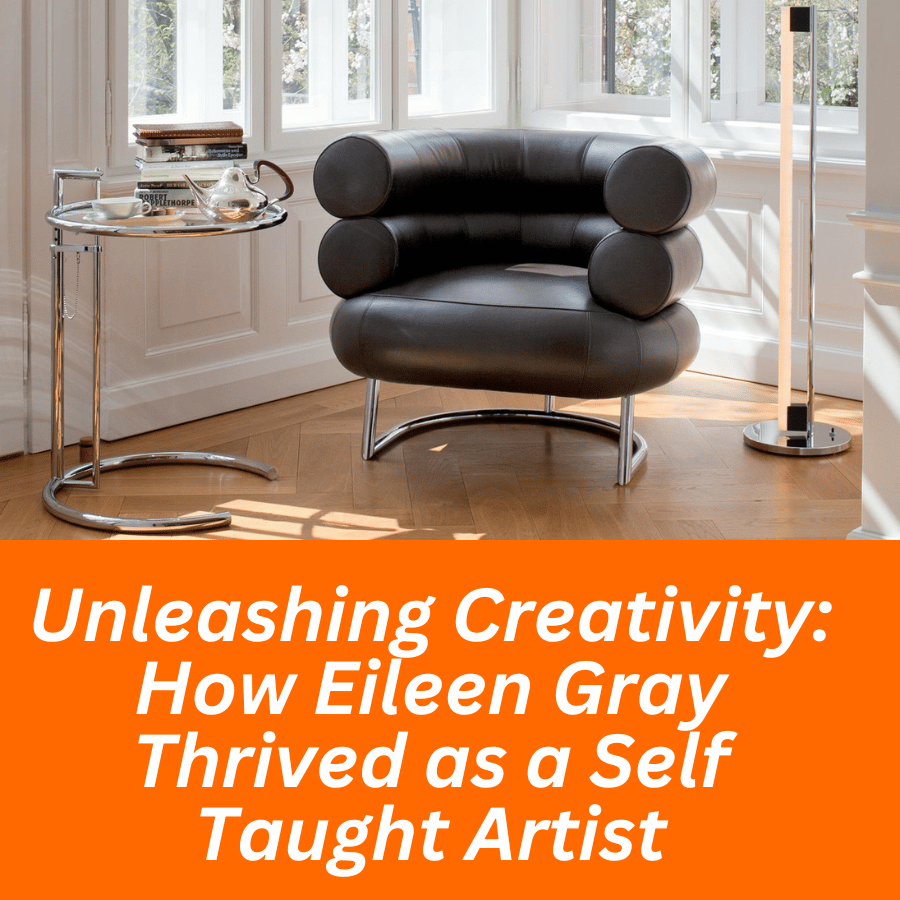
Her design philosophy resonates deeply with me. Take her iconic E-1027 table—a piece so thoughtfully designed that every detail serves both beauty and function. The table’s adjustable height isn’t just practical; it speaks to her understanding of how people inhabit and interact with space.
I often think about this interplay between form and function when I’m painting or working on a new piece of furniture for my home.
How can this color, this line, this texture not only evoke an emotion but also serve a purpose?
Today, as I write, for example, I am in the process of designing a storage unit for our bedroom which can fulfil the double purpose of storing clothes, but also add an additional workspace for writing, doodling or creating. I want it to feel beautiful, zen-like, inspiring and inviting.
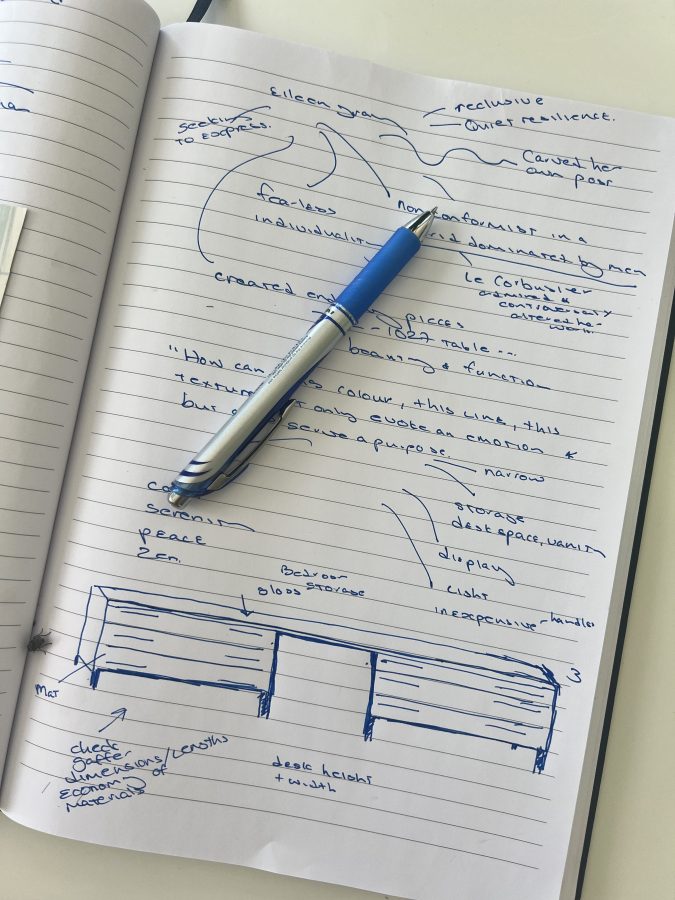
“The future projects light, the past only clouds.” ~Eileen Gray. This statement reflects Gray’s forward-thinking approach, focusing on innovation and the possibilities that lie ahead.
Eileen’s masterpiece, the modernist villa E-1027, isn’t just a house; it’s a story of collaboration, creativity, and control. The way she used light, space, and material to create harmony feels like an echo of what I strive for in my own art. Her attention to detail, from the built-in furniture to the fluid connection between indoor and outdoor spaces, reminds me that creativity doesn’t happen in isolation. It’s about weaving together elements from our surroundings and experiences into something meaningful.
But it’s not just her work that inspires me—it’s her spirit. Gray was known for her reclusiveness and her reluctance to conform to the demands of fame or commercial success. That resonates with me on a personal level. Creativity, for me, isn’t about seeking recognition; it’s about seeking truth. Like Gray, I often retreat into my own world to create art that feels authentic.
Gray’s use of materials also profoundly affects my own creative process. Her innovative use of lacquer, which she learned while living in Paris, opened up new dimensions in her work. It’s a reminder to me that no skill or technique is ever wasted—it’s all part of the creative toolkit. When I experiment with textures or dive into an abstract painting, I think of her boldness in pushing boundaries, merging the traditional with the avant-garde.
What I find most moving about Eileen Gray is her quiet resilience. Despite the lack of recognition during much of her career, she didn’t stop creating. Her work, rediscovered decades later, stands as a testament to her genius. That patience and faith in the process are something I carry with me every day. In moments of doubt, I remind myself that art isn’t about immediate applause; it’s about leaving behind something that speaks to the future.
In my guest room, I have a pair of (reproduced) Gray’s iconic E-1027 tables. They reminds me that good design, like art, is about shape-shifting—rising beyond the mundane and creating beautiful enduring art via thought, emotion, and experimentation. And when I sit down to create, I feel her spirit beside me, whispering, Take your time. Be bold. Trust yourself.
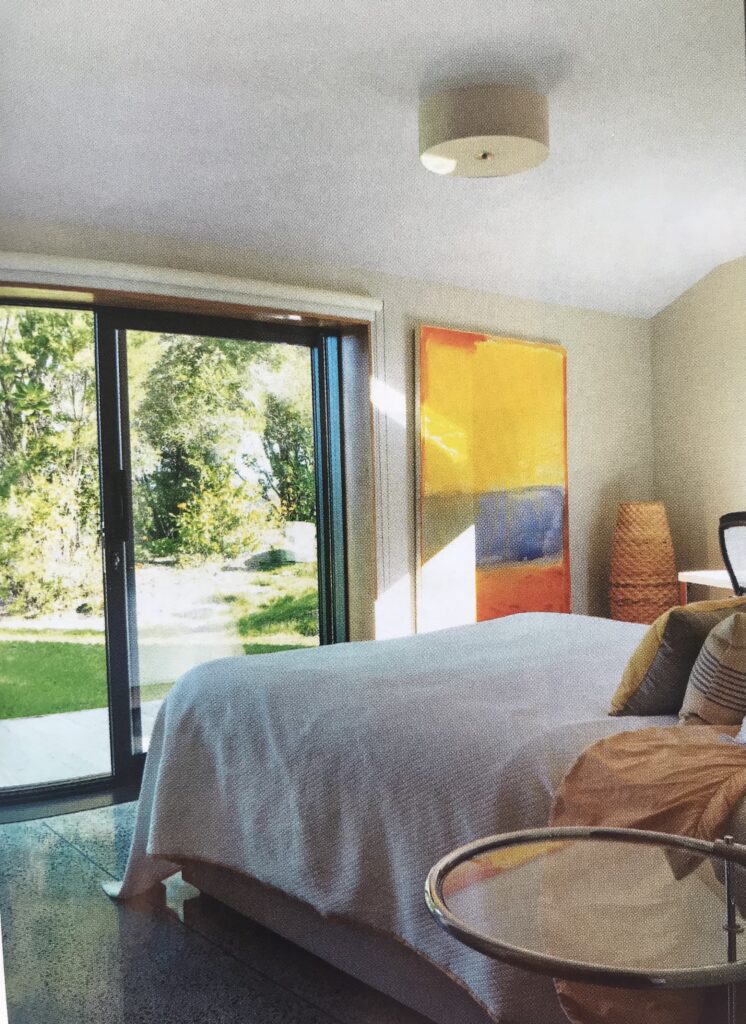
Eileen Gray’s life and work aren’t just a source of artistic inspiration—they’re a lesson in perseverance, individuality, and the power of creating beauty for its own sake. Through her, I am reminded that the greatest art comes not from seeking to impress, but from seeking to express.
I hope you enjoy this short story I wrote just for fun about Eileen Gray. As you’ll discover, Eileen was a woman who forged her creative future undeterred by lack of formal qualifications and in open defiance of socially sanctioned gender roles at the time.
In my series of Mid-Life Career Rescue books, I share more about why a lack of qualifications or formal training doesn’t have to prevent you from making an inspiring career change or creating a happy hobby.
Learn how Eileen Gray thrived as a self-taught artist, proving that qualifications and formal training are not barriers to creativity. Sometimes all it takes is one pioneering trailblazer to evoke a sense of possibility.
THE CURIOUS SOUL
The hills of Ireland cradled Eileen Gray’s childhood, their emerald sweep interrupted only by the low stone walls that divided land into neat, predictable patterns. But Eileen was not a creature of patterns. She watched the sunlight play tricks on the rough-hewn surfaces of those stones, casting shifting shadows that seemed alive, restless. She felt it in herself too—the urge to move, to break free of the confines of what was expected of her.
It began with her hands. As a girl, she would run her fingers over the intricately carved wooden armrests of her family’s chairs, imagining the unknown man whose chisel had shaped them. Who had chosen the curve, the flourish? Could she one day choose for herself? The question lingered, quiet but insistent, until she left Ireland for the first time, trading its damp hills for London’s gray sky and Paris’s riot of life.
Paris consumed her, seduced her with its streets humming with ideas and its ateliers alive with the scent of wood shavings and paint. Here, she discovered lacquer—not merely as a technique but as a way of seeing the world. Under the tutelage of Seizo Sugawara, Eileen learned to layer lacquer like secrets, each coat hiding and revealing in equal measure. Her screens became objects of quiet power, shimmering and reflective, as if they were breathing the stories they held.
But lacquer alone was not enough. She craved movement, not only within her own craft but in the world around her. Paris had introduced her to the growing language of modernism—steel and glass, light and air—and she found herself drawn to its stark honesty. It felt as though the future had knocked at her door, asking her to join.
The South of France became her laboratory. On a cliff above the sea, she imagined a house—no, a sanctuary—where modernist principles would not oppress but liberate. She called it E-1027, a cryptic name that hid and revealed, like her lacquer work, the intimacy of her collaboration with Jean Badovici. Eileen designed not just walls and windows but every chair, every table, every door handle. The house breathed with her intention, its rooms flowing into one another as naturally as sunlight streaming through the glass.
For a time, E-1027 was everything she dreamed it could be: a place where human lives could exist in harmony with design. But harmony, like lacquer, is fragile. Le Corbusier—bold, brash, a man who saw himself as the embodiment of modernism—arrived like an uninvited guest, painting murals over her pristine walls. He called it homage. To her, it was desecration.
Her voice was quieted, but not silenced. While the world ignored her, she turned her attention to her furniture, crafting tables of steel and glass, their precision echoing her belief that form and function were lovers, not strangers. Her work became whispers in a loud world, heard only by those who knew how to listen.
Decades later, the world would finally turn its gaze back to her. Museums and galleries displayed her lacquered screens, her chairs, her house. They spoke of her as a genius, a pioneer. But what did Eileen think of this belated adoration? One imagines her in her later years, seated in a chair of her own making, her hand resting on the curved edge of a table she had designed. Perhaps she felt satisfaction, perhaps bitterness. Or perhaps she had moved beyond such things, content in the knowledge that what she created could not be undone—not by time, not by men who sought to overshadow her.
I hope you enjoyed this short story and learning more about Eileen Gray.
Eileen Gray’s legacy as a trailblazer in the world of architecture and design continues to inspire countless individuals today. Her story serves as a testament to the power of passion, persistence, and the transformative change that can occur when one dares to challenge the status quo.
In the end, Eileen Gray proved that greatness knows no boundaries and that the most profound transformations often arise from the most unexpected places. She remains an eternal reminder that with unwavering determination and a willingness to defy convention, anyone can leave an indelible mark on the world.

Photo credit: Matisse. Image used for educational purposes
In my 40s I studied furniture design as part of my interior design degree. It awoke a passion and I loved it—including designing and building my own furniture designs. This is something I would love to return to. I have a few designs simmering and as I shared above, today, the day after Boxing Day, I have finished a new design which I will take to my local cabinet maker.
As part of the degree I was part of a team that created an architectural model one of Le Corbusier‘s most acclaimed house designs, The Villa Savoye in Poissy (1928–1931). It was so much fun. I shall always recall those years of studying something I loved, not for a career but for pure pleasure, fondly.
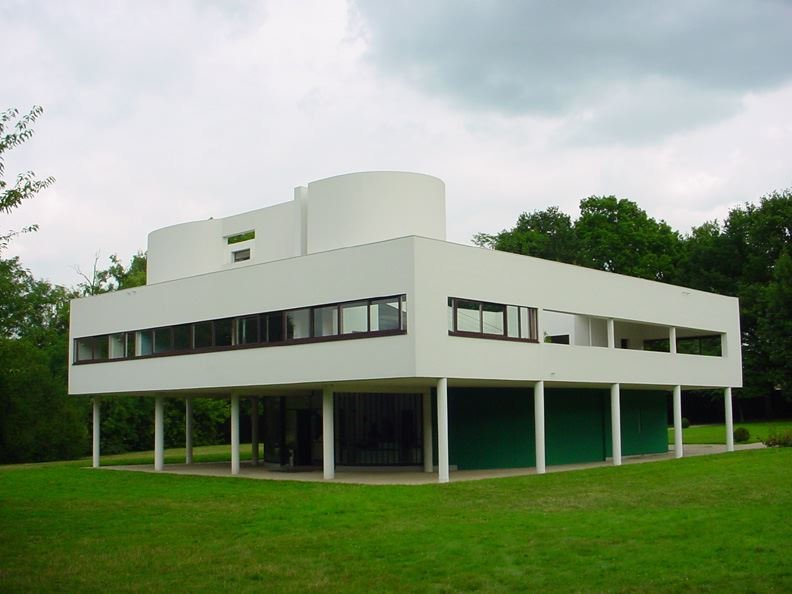
If you love reading stories about pioneering female artists, you’ll enjoy Claimed By The Sheikh. The heroine, a rebellious architect challenging the patriarchal status quo, was inspired by the sassy brilliance of Dame Zaha Hadid (DBE RA) Zaha was an Iraqi-British architect and the first woman to receive the Pritzker Architecture Prize in 2004. Notice the contrast between Le Corbusier’s hard lines and Zaha Hadid’s sensuous curves
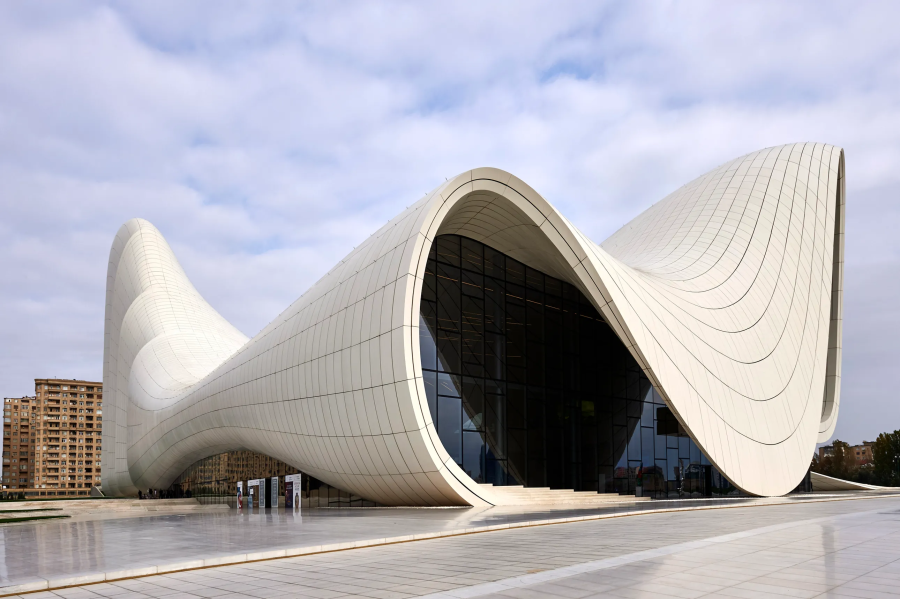
Photo used for educational purposes-credit: Andrea Pistolesi/Getty Images

AMAZON US: https://www.amazon.com/dp/B07YBN6JG7
AMAZON CA: https://www.amazon.ca/dp/B07YBN6JG7
AMAZON UK: https://www.amazon.co.uk/dp/B07YBN6JG7
AMAZON AU: https://www.amazon.com.au/dp/B07YBN6JG7
UNIVERSAL LINK: https://mybook.to/ClaimedByTheSheikh
iBOOK, BARNES AND NOBLE, AND OTHER GREAT BOOKSTORES: https://books2read.com/u/brVjdZ
The Joyful Artist: Freeing The Artist Within
Posted in: Blog
ABOUT CASSANDRA
I am an artist, storyteller, intuitive guide, mentor and Reiki master. All my creations are infused with positive energy , inspiration, and light. I believe in magic and the power of beauty, joy, love, purpose, and creativity to transform your life. My greatest joy is helping your realize your dreams. That makes my soul sing!
RECENT BLOG POSTS
CONTACT
P: +64 (0) 21 873 833
E: hello@thejoyfulartist.co.nz
BE SOCIAL


© 2026 The Joyful Artist
Website by Webstudio