


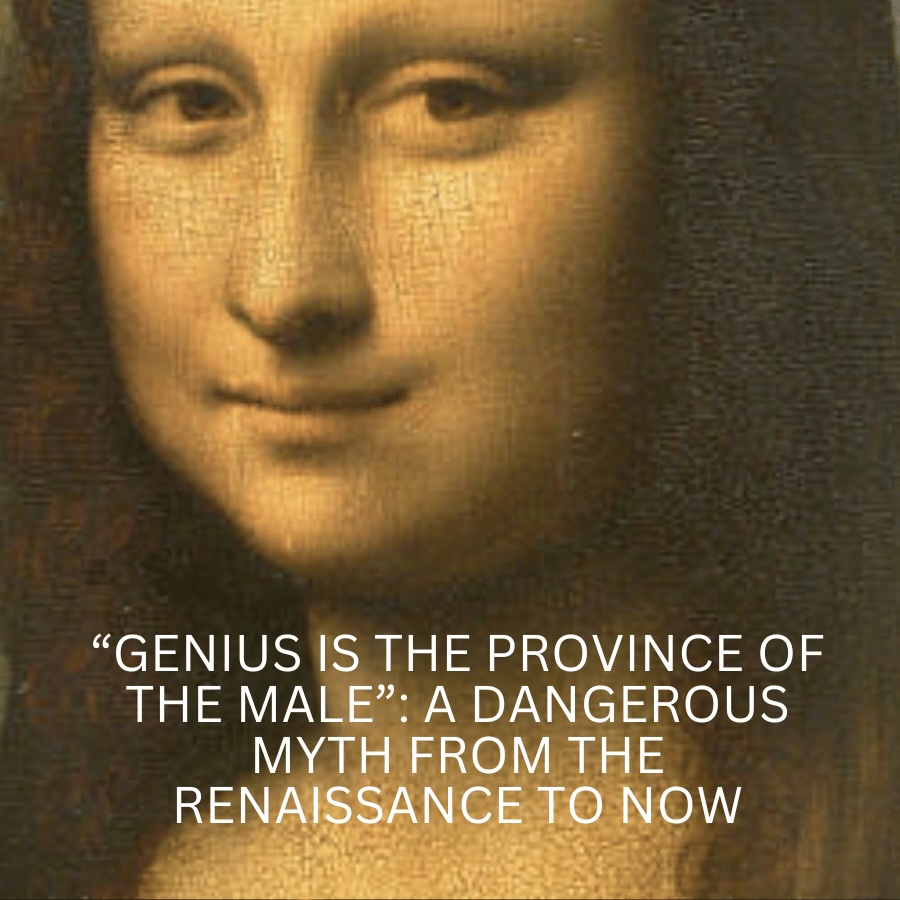
“Genius is the province of the male,” I wrote in the opening line of a recent scene in my Renaissance novel-in-progress. It was a deliberately provocative statement—meant to echo through the vaulted halls of the 15th century, and ring, uncomfortably, in the ears of modern readers.
When one of the young girls in the classroom scene challenges the line—“That’s not true! Girls are just as good as boys!”—my character, Elenore, smiles. Because the child is right. But the phrase isn’t. And yet, the world—then and now—has often behaved as though it is.
The novel I’m working on, Mona Lisa’s Secret, is set across two timelines: Renaissance Florence and modern-day Paris. At its heart is a question that has haunted me for years: What if the most famous painting in the world was not a celebration of a woman—but her silencing?
To understand how this erasure happened, we must go back—not just to Leonardo da Vinci’s studio, but to the corridors of power in Renaissance Italy, where a young Florentine named Niccolò Machiavelli was observing, advising, and writing his now-infamous treatise, The Prince.
Machiavelli understood power intimately. He wrote not how leaders should behave, but how they do. His advice to rulers was clear: appear virtuous, if it helps you gain power—but do not be bound by morality if it gets in your way.
And what better way to secure male power than to proclaim that genius itself—that unteachable brilliance—belongs only to men?
It wasn’t true, of course. But it didn’t need to be. It just needed to be believed.
In the Renaissance, women were systematically denied the tools of visibility:
Even those who found a way—like Artemisia Gentileschi or Sofonisba Anguissola—were treated as novelties or scandals.
Though we live in a more enlightened world (on paper), the echoes of the Renaissance still ripple through our institutions. Today, male-dominated “genius lists” still flood the headlines. Women in tech, art, academia, and politics continue to face subtler versions of erasure:
We teach girls they can do anything, yet punish them for doing it too loudly. We celebrate equality, but fund and promote men at staggeringly disproportionate rates. We praise their “grit,” but are slower to call it “genius.”
Mona Lisa’s Secret isn’t just a historical novel. It’s a reclamation. A reimagining. A reminder.
Elenore, my modern-day protagonist, begins her journey believing that history is about facts. But as she peels back the layers—of paint, of myth, of power—she begins to see what Machiavelli knew: History is written by those who control the image.
Whether that image is a prince in velvet robes, a curator in a Parisian office, or a woman locked behind a mysterious smile.
But what happens when the image starts to crack?
That’s the question at the heart of my book.
And it’s one I believe we’re all still answering—every time a woman demands recognition, resists invisibility, or reclaims her own brilliance.
As I write this novel, I’m not just telling Lisa’s story. I’m telling the story of every woman who’s been erased, edited, or footnoted.
And I’m giving her the last word.
“It is not necessary for a prince to have all the virtues… but it is necessary to appear to have them.” — Machiavelli
The phrase reflects a long-standing tactic: control the narrative, and you control the hierarchy.
Machiavellian logic: If the perception is that only men can be geniuses, then only men will be permitted to become them—regardless of reality.
Machiavelli advised princes to erase threats to their power—sometimes literally, sometimes through invisibility.
Perhaps the most Machiavellian twist of all is that the myth was made to seem natural—a truth woven into the fabric of art, education, and society.
“It’s not that women weren’t brilliant. It’s that they were taught not to claim brilliance—or punished when they did.”
Although more subtle, echoes of this tactic still exist:
“Genius is the province of the male” is not a fact—it’s a Machiavellian strategy disguised as a truth.
Understanding it through Machiavelli’s lens isn’t just academic—it’s strategic clarity for dismantling systems still rigged by perception.
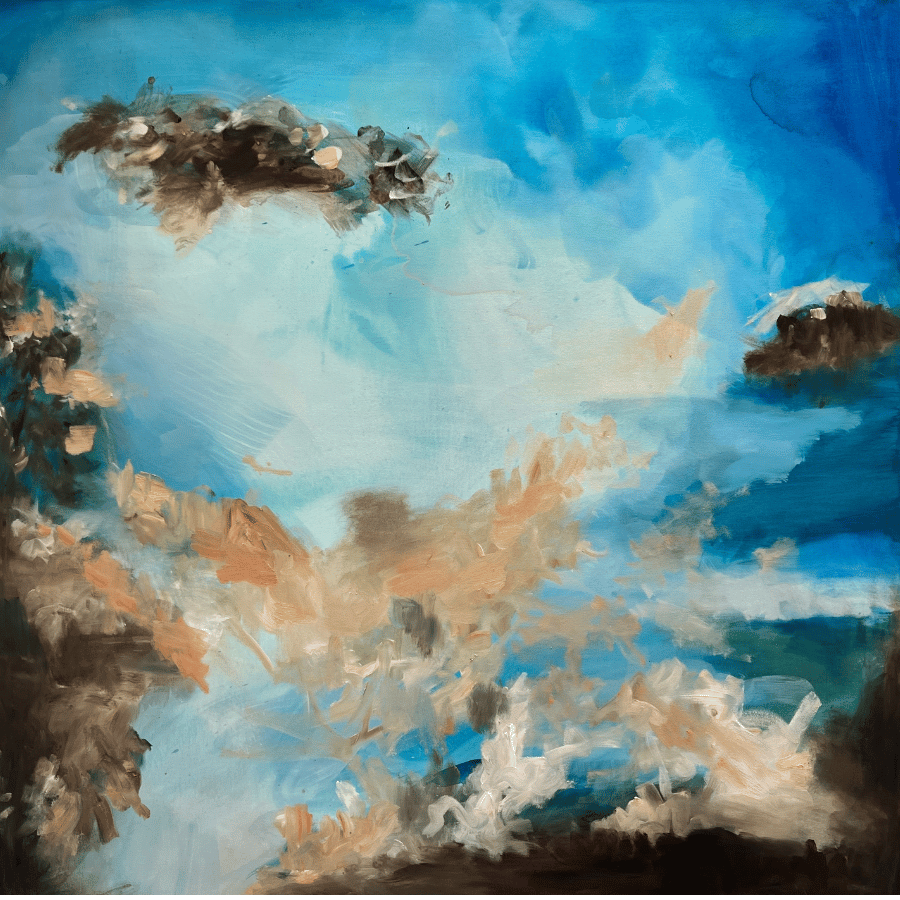
Triumph of Venus, Cassandra Gaisford, 2024
They told her she couldn’t paint.
They said genius was not her domain.
They sealed the pigment. Withheld the canvas.
Closed the door—and called it protection.
They named it practicality.
They called it love.
But the soul never forgets.
And so she waited.
Not with silence, but with gathering light.
Not in resentment, but in fierce gestation.
Decades passed.
And when the world least expected it—
She rose.
Not with vengeance.
But with colour.
Not with anger.
But with joy.
She laid her brush upon the emptiness and summoned Venus—not as a goddess of beauty alone,
but as the reborn feminine, rising from the sea of suppression.
No longer in a half-shell. No longer at the mercy of the wind.
But standing in the centre of her own storm.
This is her Triumph.
The brush is hers now.
The colour is hers now.
The story is hers now.
And every woman who sees this painting whispers,
“Me too.”
Posted in: Blog
ABOUT CASSANDRA
All my creations are infused with positive energy, love, and light. I believe in the power of beauty, joy, love, purpose, and creativity to transform your life.
RECENT BLOG POSTS
CONTACT
P: +64 (0) 21 873 833
E: hello@thejoyfulartist.co.nz
BE SOCIAL


© 2026 The Joyful Artist
Website by Webstudio